A Professional Review of the Kiwano Fruit Embroidery Design for Business Use
As an embroidery designer who regularly creates branded merchandise for small businesses, I approach every new design with a critical eye for its commercial potential. Today, I’m reviewing the Kiwano Fruit with Seeds embroidery file, not just as a decorative craft project, but as a potential asset for your brand’s visual identity.
First Impression: A Design with Distinct Personality
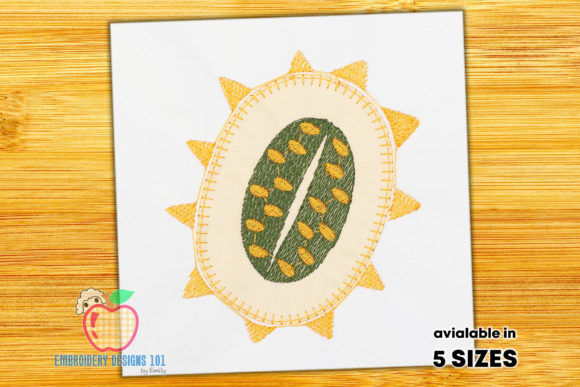
The Kiwano Fruit with Seeds design immediately strikes me as exotic and visually engaging. The title suggests a focus on the fruit’s unique internal structure—the seeds and shapes. This isn’t a generic, simplified fruit icon. It feels detailed, organic, and slightly playful, yet the described “great use of shapes and stitches” hints at a thoughtful construction that can translate well to stitch. For a business, this design personality could convey freshness, uniqueness, and a handcrafted, premium quality. It leans more towards boutique, creative studio, or specialty food brand (like a tropical juice bar or artisanal bakery) than a corporate, minimalist tech company. Its exotic vibe is friendly and intriguing.
Practical Applications for Your Small Business Merchandise
Let’s move beyond decoration and evaluate where this Kiwano Fruit with Seeds machine embroidery design could physically work on your products.
Embroidered Patches for Versatile Branding
This is one of the strongest applications. A well-made embroidered patch based on this design could be superb. It could serve as a product label sewn onto handmade tote bags or aprons, a badge of authenticity on product packaging, or a collectible item for customer loyalty. Patches also allow for flexibility—they can be added to staff uniforms, event merch, or sold separately as branded pins. The key will be testing the design at a small patch size to ensure the seed details and outlines remain clear and don’t become a muddy blob of stitches.
Apparel and Accessories for Staff and Customers
For staff uniforms like aprons, polo shirts, or work shirts, the Kiwano Fruit with Seeds could make a distinctive chest logo or sleeve detail. On a chef’s apron in a cafe with a tropical theme, it would be perfect. For customer-facing merchandise, such as caps or tote bags, the design offers a recognizable mark. Cap embroidery, especially on the curved front, requires a design that balances detail with robustness; the seed clusters here might need simplification if hooped too small. For a tote bag design, its organic shape would complement the fabric nicely.
Enhancing Product Presentation and Value
Think beyond wearables. For a florist, pet brand, or creative studio selling handmade products, a small embroidered accent featuring the Kiwano Fruit on a product’s tag or the product itself (like a pillowcase) elevates the item. It signals care and craftsmanship, directly increasing perceived value. It becomes a consistent design asset across your line.
Considerations and Caution for Professional Results
To ensure this digital embroidery file performs well in real commercial embroidery, some careful steps are necessary.
Testing on Real Fabrics and Contexts
Always, always stitch a test sample. First, run it in a single thread color (like black or white) on your intended fabric—a cotton twill for a patch, a denim for a tote, a polyester for a cap. This reveals the pure structure without color distraction. Check the stitch density: very dense areas on this fruit might be stiff on lightweight fabrics or problematic on curved surfaces like caps. Inspect the spacing between elements; tight spacing can lead to puckering. Using the proper stabilizer for your fabric texture is non-negotiable for a clean finish.
Scale and Detail Integrity
The “great use of shapes” suggests deliberate composition. However, when scaling down for a small patch size (under 2 inches), those intricate seed details might not hold up. You may need to selectively simplify or ensure the embroidery file includes a specifically optimized smaller version. Also, consider thread color contrast. On dark uniforms or bags, you’ll need bright, contrasting threads for the design to pop. Before production, create a printable mockup to show your client or team how it integrates with other brand assets.
Licensing and Pre-Production Checks
The product description notes it comes with multiple embroidery file formats. Before any business use, confirm the licensing terms for commercial embroidery. Ensure the included hoop size range matches your intended applications. If specific sizes aren’t listed, advise your digitizer or check the file properties. Don’t assume.
The Impact on Your Brand Identity and Customer Trust
Choosing this Kiwano Fruit with Seeds design isn’t just about aesthetics; it’s a brand decision.
A unique, well-executed embroidered logo fosters recognition. It makes your staff uniforms, aprons, and merchandise instantly identifiable. The handmade presentation inherent in embroidery builds customer trust and suggests quality and attention to detail. For a small business, this visual consistency across your apron embroidery, cap embroidery, and product labels screams professionalism. It tells customers you’ve invested in your brand’s presentation.
However, the design’s exotic, detailed nature means it might not suit every brand. For a modern, minimalist brand, it could feel too busy. For a rustic, earthy brand, it might be perfect. Compare it beside your other logo elements or typography to ensure cohesion. Ultimately, a finished product bearing this design becomes a tangible piece of your brand story, encouraging buyer engagement and loyalty.
Final Designer Notes for Successful Implementation
To wrap up this review from a professional embroidery designer’s perspective, here are my condensed notes for using the Kiwano Fruit with Seeds for your small business merch:
- Start Simple: Test the embroidery file in one color on scrap fabric to judge its core structure.
- Size it Right: Verify it works at your intended patch or logo size before committing to bulk production.
- Context Matters: Match it to your brand’s personality—it’s strong for creative, food, handmade, or tropical themes.
- Technical Prep: Use appropriate stabilizer and consider fabric texture (rough vs. smooth) for optimal stitch definition.
- Commercial Clearance: Confirm the license permits your intended commercial embroidery use on custom apparel and products.
- Present to Clients: Use a mockup to visualize it on the actual item—a cap, tote bag, or apron—for approval.
The Kiwano Fruit with Seeds machine embroidery design presents a compelling opportunity for businesses seeking a distinctive, handcrafted emblem. Its exotic detail can translate into a powerful brand mark when embroidered with skill and careful planning. By focusing on its real-world application on patches, uniforms, and merchandise, you can turn this unique craft project into a valuable asset for your brand’s growth.