A Professional Review of "29 Again Talk About Recycling" for Business Use
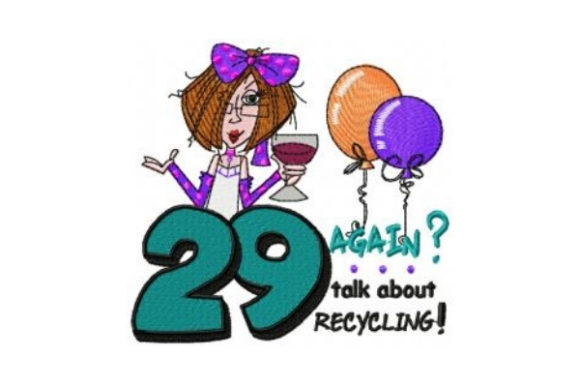
As an embroidery designer working with small businesses, my first task is always to assess a design’s potential beyond simple decoration. When reviewing 29 Again Talk About Recycling, the immediate impression is one of playful, friendly messaging with a clear thematic hook. The title suggests a lighthearted, conversational tone, perfect for brands aiming for approachability. For a wine-focused product, this design inherently carries a celebratory and social vibe, making it feel less like a corporate logo and more like a badge of shared interest.
Visual Personality and Brand Alignment
29 Again Talk About Recycling strikes a balance between decorative and communicative. The phrase is the star here. This isn’t a generic graphic; it’s a statement. For a small café, boutique, or creative studio with a wine-related offering or ethos, this embroidery design can serve as a clever brand accent. It feels modern and slightly rustic, leaning towards handmade authenticity rather than sterile premium. This is key for businesses like Etsy sellers or craft studios where the personal touch directly increases product value and buyer engagement.
The design’s success hinges on its application as a storytelling element. On an apron in a small bakery that also hosts wine tastings, or on a tote bag for a local florist with a "vine and vase" theme, 29 Again Talk About Recycling acts as a subtle badge of community. It builds customer trust by showing personality, not just a logo. For a pet brand? Maybe not. But for any business where wine is part of the social fabric—a handmade shop, a gift boutique—this embroidery file becomes a powerful tool for visual consistency across merchandise.
Practical Applications in Small Business Merch
Let’s translate that visual personality into real, stitched products. The description states it will look great on any fabric, which is a promising start for commercial embroidery projects. Here’s where I see 29 Again Talk About Recycling performing well:
- Embroidered Patches: This is a prime candidate for a standalone patch. Businesses can stitch it onto premade patches for customer gifts, event merch, or as a sellable item itself. It’s conversational, making the patch feel like a collectible.
- Chest Logo Accents & Sleeve Details: On staff uniforms or work shirts for a wine bar or vineyard-themed café, this design works as a smaller secondary mark, adding personality next to a primary logo.
- Cap Embroidery: Given the likely text-based nature, careful sizing is needed, but it could be a great cap design for staff or merchandise, reinforcing a friendly, team spirit.
- Tote Bag Design & Apron Embroidery: These are ideal canvases. The design becomes a branded product add-on, elevating a simple tote or apron into specialty merchandise.
- Product Packaging Accents: For a handmade brand selling wine-related goods, a small embroidered version on a label or tag adds a tremendous handmade presentation and perceived value.
Critical Considerations for Production Success
While the potential is high, an embroidery designer must approach 29 Again Talk About Recycling with practical eyes. The description mentions it comes with multip (likely multiple formats/sizes), but specifics are crucial. Before any production, small business owners and apparel decorators must verify the details not provided here.
Where the design should be used carefully:
- Small Patch Sizes & Tiny Lettering: If the text is intricate or the embroidery file isn’t optimized for very small dimensions, readability on a small patch or cap front could suffer. Always test at the intended size.
- Curved Surfaces: Embroidering on caps requires specific file adjustments. Confirm the design is suitable for curved surfaces or be prepared to adapt.
- High Stitch Density: A dense design can be stiff on flexible items like apparel. Check the stitch count if available—high density is great for durability on patches but can be uncomfortable on chest logos.
- Dark Uniforms & Thread Color Contrast: The original color palette is unknown. On dark fabrics, you may need to alter thread colors for visibility. Always test on real fabric swatches.
- Items for Frequent Washing: For staff aprons or work shirts, ensure the design has clean, secure outlines and proper stabilizer was used during stitching to withstand washing.
Essential Designer Notes Before You Stitch
Here is my standard pre-production checklist for a design like 29 Again Talk About Recycling:
- Test in Black and White First: Run a simple version to check form and readability without color distractions.
- Check Hoop Size Compatibility: Verify the embroidery file includes sizes appropriate for your target items (e.g., small hoop for patches, larger for tote bags).
- Review Thread Color Contrast: Create a palette that works on both light and dark base fabrics to maintain brand identity across different merch.
- Inspect Lettering Spacing: Ensure characters are not too tight, which can cause thread bunching and reduce clarity.
- Test on Real Fabric: Don’t rely on digital previews. Stitch a sample on the actual fabric texture you’ll use—canvas for totes, twill for caps, cotton for aprons.
- Use Proper Stabilizer: Match stabilizer type to fabric. This is non-negotiable for a professional finished product.
- Create a Printable Mockup for Client Approval: Especially for handmade brands or Etsy sellers, showing a mockup helps clients visualize the design on their merchandise.
- Compare Beside Other Design Assets: See how 29 Again Talk About Recycling looks alongside your existing logo or branding. It should complement, not clash.
- Confirm Commercial Licensing: Before using for business merch, verify the digital embroidery file license permits commercial use. This is a critical, often overlooked step.
Final Thoughts on Business Value
29 Again Talk About Recycling is more than a cute phrase; it’s a versatile design asset for the right niche business. Its value lies in its ability to convey brand personality and foster engagement. For a wine-related small business, embroidered patches featuring this design can become signature items, enhancing customer recognition and loyalty. On staff uniforms, it promotes a friendly, professional environment.
Ultimately, its success depends on meticulous execution. By following the practical steps above—testing, verifying file details, and ensuring production quality—this machine embroidery design can transition seamlessly from a digital file to powerful, tangible branded merchandise. It reminds us that in commercial embroidery, the design is just the beginning; the real magic is in how thoughtfully it’s applied to tell your brand’s story.